

WE DON’T HAVE A STORYTELLING PROBLEM
Every year, organizations invest millions of dollars refining their brand stories. They hire agencies, redesign websites, rewrite messaging, and launch campaigns intended to create stronger emotional connections with customers. Yet despite those investments, many products remain difficult to differentiate. They may be well designed and well marketed, yet they do not become meaningful.
The prevailing assumption is that the problem lies in the story. If customers are not connecting, organizations look for better messaging, stronger narratives, or more compelling campaigns. That diagnosis is incomplete.
Storytelling is important, but not the fundamental problem. It is the point where organizations discover they failed to establish a meaningful foundation. By the time marketing crafts the story, the product has already been designed, positioned, and developed around assumptions that were not rooted in anything the market values.
Brand stories increasingly sound alike. They promise innovation, craftsmanship, quality, sustainability, or purpose. While those claims may all be true, they do not help customers understand why they matter.
Organizations do not have a storytelling problem. They have a meaning problem.
Why Organizations Turn to Storytelling
Organizations did not embrace storytelling because they misunderstood branding. They embraced it because traditional sources of competitive advantage became harder to sustain. Functional advantages became easier to replicate, product life cycles shortened, and customers gained access to more choices than ever before. Storytelling offered a way to differentiate that competitors could not easily copy.
Stories provide context. They communicate purpose, reinforce identity, and help customers understand what an organization stands for. The problem emerged when storytelling became viewed as the source of differentiation rather than the expression of meaning.
Organizations invested more heavily in narratives, positioning, and campaigns. Those efforts improved communication, but do not articulate something meaningful.
Today, most organization promises authenticity, innovation, craftsmanship, community, or purpose. These attributes are valuable. So the problem is not communication. It is searching for a story after the product has been designed and positioned.
Meaning Exists Before Products
Organizations treat meaning as something products create. But before someone becomes a customer, they have already accumulated a lifetime of experiences that shape how they interpret the world around them. Family traditions, personal achievements, cultural influences, communities, and shared moments all contribute to the beliefs and identities that guide future decisions. Meaning deepens through participation.
Experiences repeated over time shape identity. A single visit to a vineyard is enjoyable. Decades of exploring wine regions, learning production methods, and sharing bottles with friends creates something far more enduring. The same is true for sports supporters, collectors, outdoor enthusiasts, and volunteers who dedicate years to a cause. Participation transforms experiences into lasting meaning.
This helps explain why two customers can purchase the same product for entirely different reasons. One buys a watch to tell time. Another buys the very same watch because it reflects family tradition, personal achievement, or a lifelong appreciation for craftsmanship.
The product is identical. The meaning is not.
The same principle extends far beyond luxury goods. A football jersey can represent childhood memories shared with a parent or belonging to a community that stretches across cities and generations. Mission-driven organizations demonstrate the same pattern. The most enduring nonprofits resonate because supporters already hold deeply rooted beliefs about service, compassion, opportunity, and community. The organization gives people a meaningful way to express those values.
Products do not create meaning. They become enduring when they express meaning.
What Organizations Should Discover First
If meaning exists before products, innovation cannot begin with the product.
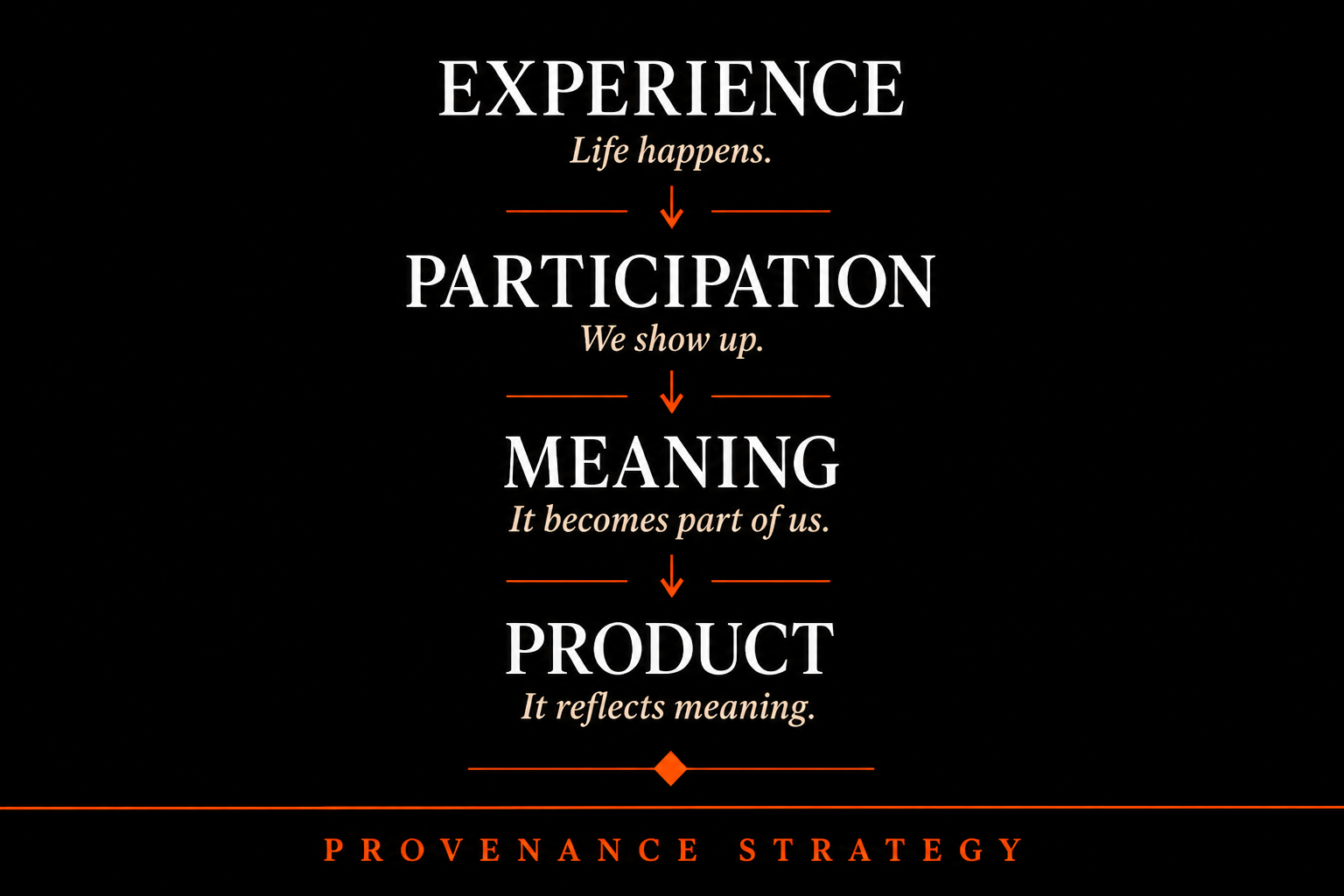
Experience → Participation → Meaning → Product
Traditional product development starts by identifying customer needs, analyzing competitors, and defining functional requirements. These activities are essential, but do not explain why customers attach meaning to one product while overlooking another. They describe behavior, not what shapes it.
Organizations need to understand what experiences shaped the customer? What traditions do they value? What communities do they belong to? What aspirations, beliefs, and memories influence how they evaluate products? These questions uncover meaning. Once understood, product development changes. Features, design, positioning, and marketing become methods of expressing meaning rather than unsuccessful attempts to create it.
Closing Thoughts
Organizations will continue investing in branding, marketing, and storytelling because each plays an essential role in bringing products to market.
The mistake is not telling stories. It is expecting stories to create meaning that was never established in the first place.
Meaning is formed before someone becomes a customer. It develops through experiences, participation, relationships, traditions, and identity. Products become meaningful when they give people an authentic way to express what already matters to them.
Storytelling remains essential as it gives meaning a voice.