

MOST PRODUCT STORIES ARE WRITTEN TOO LATE
Most product stories are written too late. Not because organizations underestimate storytelling, but because of when narrative enters the product development process.
The sequence. Teams build the product, define capabilities, refine positioning, develop messaging, and eventually launch. Narrative enters near the end, primarily to explain what has already been created.
At that point, much of the product's meaning has already formed. Products begin communicating long before launch because every decision influences what the product comes to represent. Customer priorities, capabilities, tradeoffs, and intended use all shape how the market understands the product. By the time teams begin discussing positioning and storytelling, many of those impressions are already taking shape.
The Problem Is Not Execution
When products become difficult to explain, organizations usually look to communication first. They refine messaging, test new positioning, revise launch materials, and search for better ways to describe the product.
Those efforts can help. The challenge is that the product already exists. Its priorities have been established, its capabilities have been chosen, and its tradeoffs have been made. Customers, partners, investors, and internal teams have already begun forming their own understanding of what the product represents. By that point, narrative is usually explaining decisions rather than guiding them.
Why Narrative Gets Pushed Downstream
Organizations do not postpone narrative because they believe it is unimportant. They postpone it because other decisions demand immediate attention. Product teams are defining requirements, engineers are solving technical problems, designers are refining the customer experience, and leadership is deciding where to invest time and resources. Those decisions move the product forward, while narrative appears to belong later, after the product is ready for the market.
That assumption is understandable. Most organizations view narrative as a communication activity rather than a product development activity. As a result, narrative is naturally assigned to the later stages of development, even though the product's meaning is already beginning to take shape.
Every decision appears operational when viewed on its own. Who the product serves, which problems deserve attention, which capabilities matter most, and which tradeoffs are acceptable all seem like practical development choices. Collectively, those decisions determine what the product comes to represent.
Modern product development reinforces this pattern. Responsibility is divided across specialized teams, each focused on making sound decisions within its own area of expertise. Customers, however, never experience engineering, design, product management, and marketing separately. They experience a single product shaped by every decision made throughout development.
That is why product meaning is so easy to overlook. No individual decision creates it. Meaning emerges from the accumulation of decisions that reinforce, or contradict, one another. By the time marketing begins writing the story, much of that story has already been written.
Story-First Product Development
The strongest product organizations approach development differently. Rather than waiting until launch to define the story, they establish a shared understanding of what the product should represent before major decisions begin accumulating. That understanding becomes the reference point for product development, positioning, customer experience, and communication.
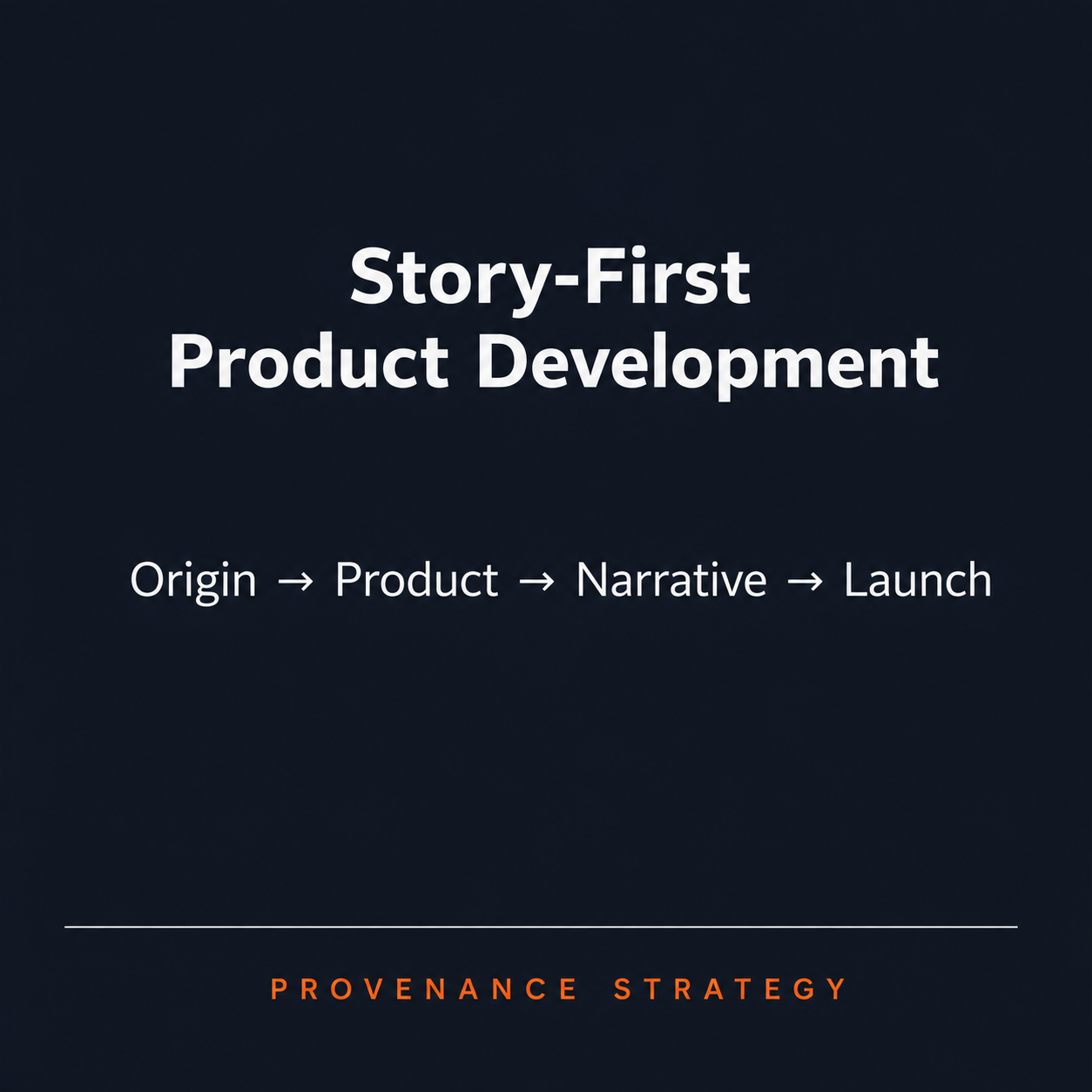
Purpose comes first.
Product decisions reinforce that purpose.
Narrative grows from those decisions.
Launch introduces a story that has been developing throughout the process.
Product development and meaning evolve together.
When narrative enters early, it guides product development.
Narrative Is Not Packaging
Many organizations associate narrative with storytelling, branding, messaging, or launch campaigns. Those are all expressions of narrative, but not where narrative begins.
Narrative begins much earlier by helping organizations establish what a product should represent before major decisions begin accumulating. That shared understanding influences which customers receive attention, which capabilities are prioritized, and which tradeoffs define the product long before marketing begins preparing for launch.
Seen this way, narrative is less about communicating completed decisions than coordinating future ones. It gives engineering, product management, design, and marketing a common reference point as the product evolves.
When narrative enters late, each function can make sound decisions while gradually moving the product in different directions. When narrative enters early, those same decisions reinforce one another, creating a product that is easier for customers to understand because it expresses a consistent underlying purpose.
Closing Thought
Every product should tell a story. Organizations do not struggle because they lack creativity, strong products, or capable marketing teams. They struggle because meaning emerges gradually through hundreds of product decisions made long before anyone begins thinking about narrative.
Story-First Product Development changes that sequence. Rather than asking organizations to tell better stories, it encourages them to establish a shared purpose before major decisions begin accumulating. Narrative becomes more than a launch activity. It becomes a guide for the decisions that shape the product from the beginning.