

WHY SEQUENCING SHAPES PRODUCT MEANING
Most teams assume product meaning is shaped at launch. It is not. Meaning begins taking shape much earlier through the sequence of decisions that define the product.
The process usually follows a familiar pattern. Teams build the product, expand capabilities, refine positioning, develop messaging, and eventually launch. Narrative enters near the end, primarily to explain what has already been created. Products begin communicating long before launch.
Every product decision influences how the market understands the product. Customer priorities, feature choices, tradeoffs, and intended use all shape what the product comes to represent. By the time messaging begins, that interpretation is already taking shape.
Sequence does more than organize development. It shapes product meaning.
Sequence Narrows Future Meaning
A common assumption in product development is that meaning can be clarified later. If positioning feels weak, refine the messaging. If adoption slows, adjust the narrative. If the market misunderstands the product, explain it differently. Sometimes those adjustments help. They also have limits as the product already exists.
As products evolve, customers begin forming expectations about what they are, who they serve, and the role they play in the market. With each decision, the range of believable interpretations narrows. This is why some products feel immediately coherent while others require continual explanation despite significant communication effort.
The problem is usually not messaging. It is the sequence that shaped the product long before messaging began.
Decisions Accumulate Into Interpretation
Products are not defined by a single decision. They are shaped by hundreds decisions.
Which customers matter most?
Which problem deserves the greatest attention?
Which capabilities define the product?
Which tradeoffs are acceptable?
Each decision influences how the market understands the product. As those decisions accumulate, they reinforce certain interpretations while making others less believable. A clear direction creates coherence. Without one, positioning expands, communication becomes reactive, and the product begins signaling competing meanings.
Eventually, the product tries to represent too many things at once. Not because the decisions were poor. But because they never reinforced the same narrative.
Story-First Moves Narrative Earlier
This is where Story-First Product Development takes a different approach. Instead of treating narrative as something added after the product is complete, it becomes part of the decision-making process from the beginning.
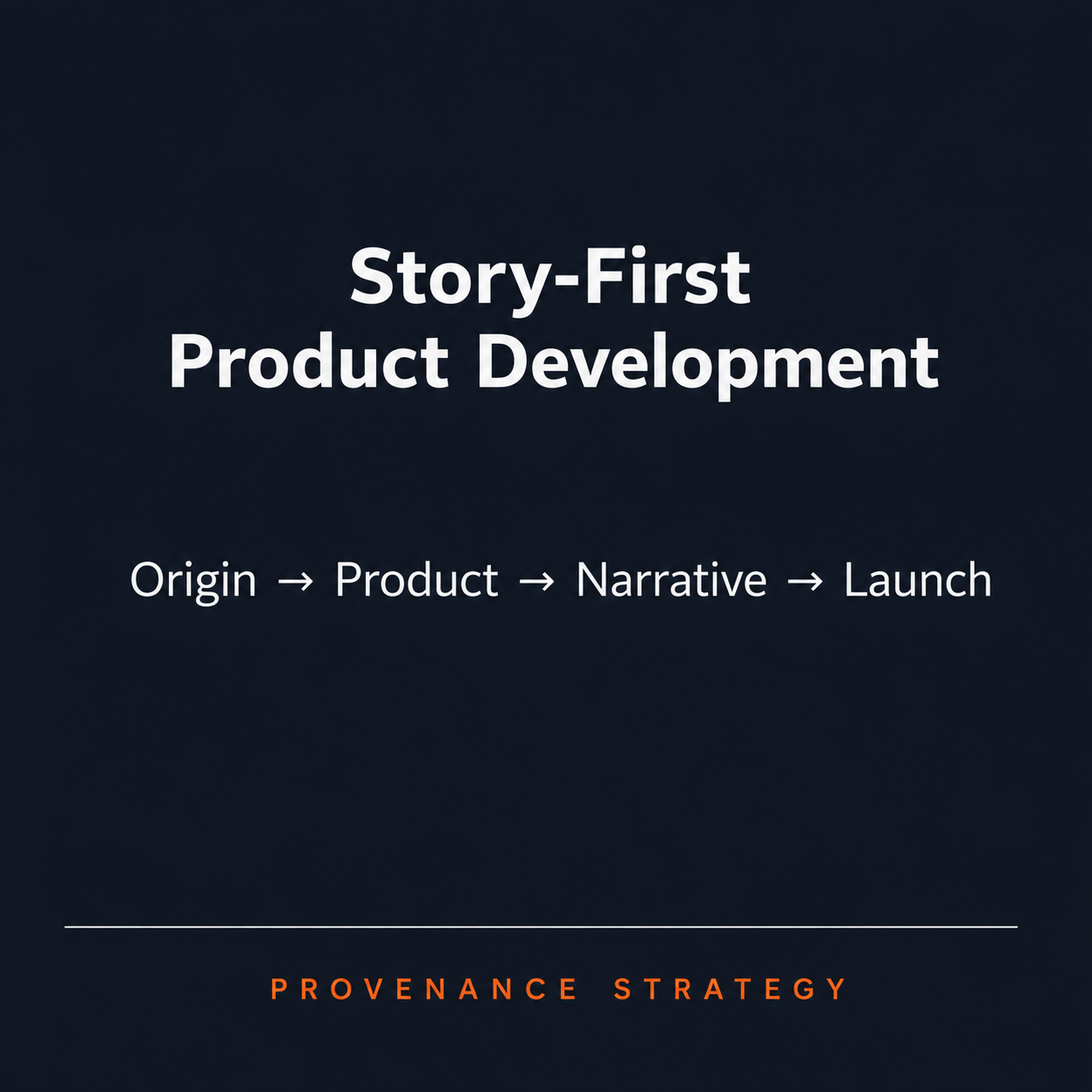
In this model, origin establishes purpose. Product decisions reinforce that purpose. Narrative grows from those decisions rather than being layered onto the product later. Launch amplifies the existing direction. Product development and meaning evolve together.
This moves narrative to the point where organizations still have the greatest opportunity to influence the outcome. The result is greater alignment between product decisions, positioning, and market understanding - with fewer positioning resets and less messaging drift over time.
Narrative Is Misunderstood
Many organizations associate narrative with storytelling, branding, launch campaigns, or messaging. Those are all expressions of narrative, but they are not where narrative begins.
Narrative starts earlier. It influences which problems receive attention, which customers matter most, which capabilities are prioritized, and which tradeoffs define the product. Those decisions shape what the product becomes before marketing ever explains it.
That is why narrative cannot be reduced to messaging. Messaging explains the product, but narrative shapes the product.
Explanation Does Not Create Alignment
Most organizations recognize when clarity weakens. The product becomes harder to position. Different teams describe it differently. Customers don't seem to understand it in the same way.
The instinct is to improve the explanation. Sometimes that helps. But explanation and alignment are not the same thing. A well-written message cannot resolve conflicting product decisions. Clearer communication may improve the explanation, but it cannot create coherence where the product no longer communicates a consistent direction.
Alignment emerges when product decisions, narrative, positioning, and market understanding reinforce one another from the beginning.
Closing Thought
Most organizations think sequence affects execution. It does, but it also shapes product meaning.
The order in which decisions are made influences how customers eventually understand the product. By the time messaging begins, many of those impressions have already formed.
Organizations cannot postpone meaning until launch. Every decision made before launch contributes to what the product ultimately represents.
The products that achieve lasting clarity are not explained more effectively, but built intentionally.